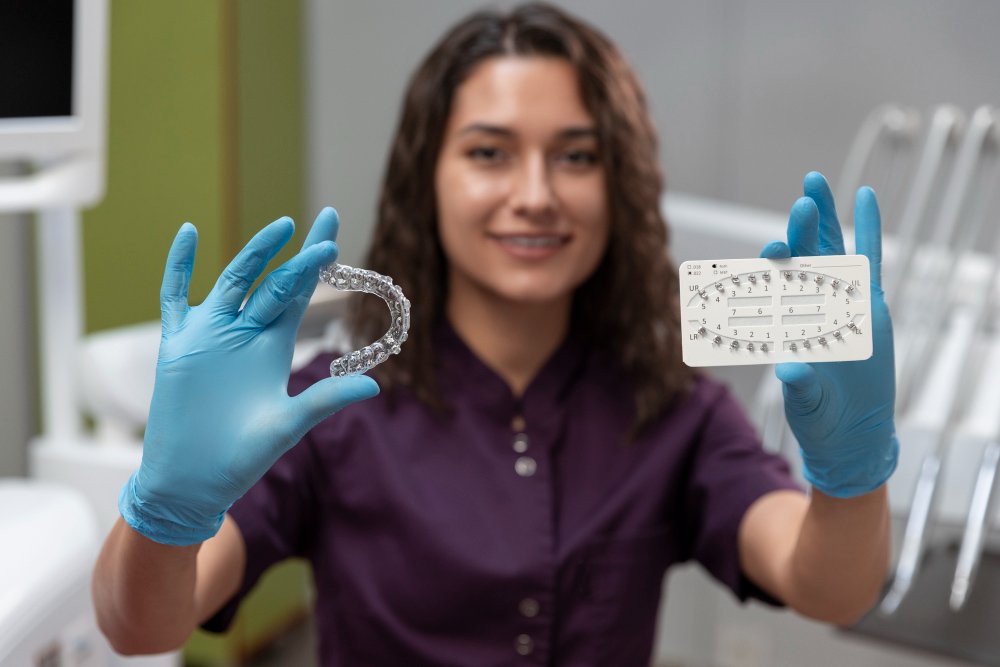
Invisalign vs Braces is an important comparison when choosing the right orthodontic treatment for your smile. Both options can help improve tooth alignment, spacing, crowding, and bite concerns, but they differ in appearance, comfort, maintenance, and daily convenience.
During your consultation, we assess your dental needs, smile goals, lifestyle, and treatment requirements. We then explain the advantages and limitations of Invisalign and traditional braces so you can make a confident and informed decision.
Comparison and Planning.
- Comprehensive orthodontic evaluation
- Digital 3D scans and bite assessment
- Evaluation of crowding, spacing, and alignment
- Comparison of Invisalign and braces for your case
- Assessment of comfort, appearance, and lifestyle
- Discussion of expected treatment duration
- Review of treatment costs and maintenance
Key Benefits.
Treatment time varies from person to person and depends on the complexity of the orthodontic problem. Neither option is automatically faster for every patient. Your dentist can recommend the most suitable approach after evaluating your teeth and bite.
Invisalign can effectively treat many common orthodontic concerns, while braces may be preferred for certain complex cases. The most suitable option depends on your individual alignment, bite, and treatment goals.
Invisalign clear aligners are generally much less noticeable than traditional braces. Braces use brackets and wires that are visible on the teeth, while Invisalign uses clear, removable aligners.
Invisalign aligners can be removed while brushing and flossing, making normal oral hygiene easier. With braces, cleaning around brackets and wires requires additional care and attention.
Some complex orthodontic cases can be treated with Invisalign, while others may benefit more from traditional braces. A detailed examination is needed to determine which treatment can provide the most predictable results for your specific case.


